DJ gear for starters: what equipment do beginner DJs actually need? It’s easy to overspend or choose a controller that doesn’t fit your software when you’re starting out, so we’ll go through the basic parts of a DJ controller setup and what is actually worth getting first.
You might also like: Can I DJ With Just A Laptop? – Do You Really Need A DJ Controller?
This web portal is reader-supported and is part of the AliExpress Partner Program, Amazon Services LLC Associates Program, eBay Partner Network, and Guitar Center Affiliate Program. When you buy using links on our site, we may earn an affiliate commission.
For a basic digital setup, a controller and a few accessories are usually the easiest place to start. Larger CDJ-style systems, standalone setups and DVS setups certainly can make sense later, but they do cost more and add extra hardware before you’ve learned the basics.
What DJ software do I need?
Many modern DJ controllers are designed to work best with specific software, so your hardware choice often narrows down the options.
Many AlphaTheta/Pioneer DJ controllers are built around Rekordbox and/or Serato, while Native Instruments controllers are most tightly integrated with Traktor. Some current controllers support several different DJ applications out of the box.
The most popular pieces of DJ software at the moment include Serato DJ, Rekordbox, Traktor Pro, and VirtualDJ.
Software such as Traktor and VirtualDJ give you quite a lot of MIDI-mapping freedom, but the support for many more advanced controller-bound features is not guaranteed. Rekordbox and Serato usually do come with full mappings for their dedicated Hardware Unlock devices, but in turn they often have limited controls customization capabilities.
If you want to use a controller with software it wasn’t made for, check compatibility for the exact controller and operating system before buying. This information is always available on both the manufacturer’s and the software developer’s websites.
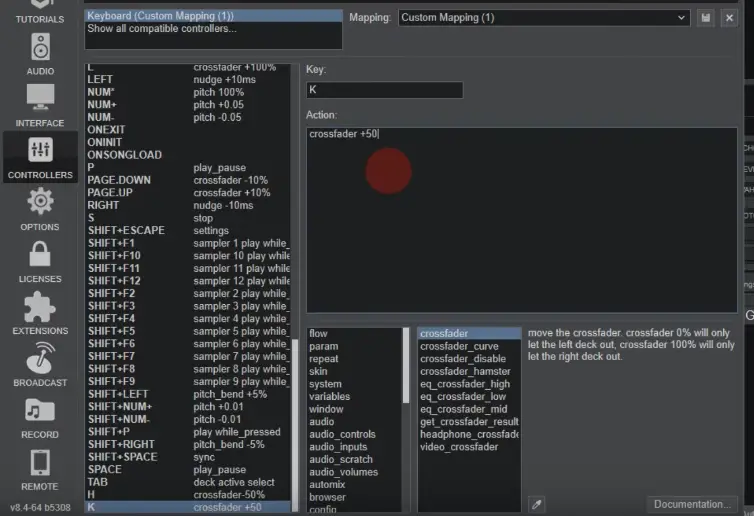
Building a mapping from scratch is not a beginner-friendly way to set up your first controller, so if you are at least a little bit confused about all this, it’s best to start with a device that has official, out-of-the-box support for the software you decide to use.
Software access differs between brands. Rekordbox uses Hardware Unlock with supported controllers, Serato DJ Lite is free for compatible hardware, some controllers unlock Serato DJ Pro when connected, and devices such as the Traktor MX2 come with the full version of their intended software ready for you to install and use.
Check exactly what comes with the controller you plan to buy, because some features can still require a paid upgrade. This is especially true with Serato DJ Lite/Pro.
If you don’t have a software preference yet, Rekordbox and Serato are still safe starting points, simply because of their broad hardware support and large user bases.
Traktor Pro 4 and VirtualDJ are strong alternatives if their workflow or mapping flexibility suits you better, and you know you’ll be using custom MIDI controllers in your setup at some point in the future.
Learn more about the difference here: Serato DJ Lite vs. Pro (12 Most Important Differences)
What DJ controller should you choose when starting out?
Essentially, you will have to choose between entry-level controllers that are cheaper but may leave out some controls and connections, and more expensive models that give you more room to grow. Don’t be intimidated by a more complicated layout.
The basic mixer/deck controls work (and usually look) the same way on both entry-level and advanced devices. The extra money mainly buys more controls, effects, inputs/outputs and room to expand your setup.
If the layout still looks confusing to you, I’ve prepared an illustrated “DJ controllers explained” guide that covers the mixer, decks, pads, jog wheels, tempo controls and the other sections you’ll find on a typical controller. It’s very beginner-friendly and explains all of the most important terminology to get you started.
Once you know which features you actually need, you can also use our DJ Gear Database to quickly browse and compare over 120+ different controllers.
How much does DJ gear cost anyway? (DJ Controllers)
While it’s hard to pinpoint an exact average price of a DJ controller as prices change and there are many different hardware tiers, a new beginner controller generally starts at around $180-$350.
A more complete 2-channel setup can often cost around $400-$500, while 4-channel controllers usually start around the $900 mark and higher-end models can go well past $1,500. Keep in mind that these are rough estimates for the present day.
The point is, you don’t need the most expensive controller to learn. If your budget is limited, spending the extra money on decent headphones, speakers and your music library can make much more sense than jumping straight to a flagship controller.
Laptop or laptop-less approach?
Generally there are two routes you can take – a controller that relies on DJ software running on your laptop/mobile device, or an all-in-one DJ system that can play music without a computer connected. The latter usually costs more.
Laptop-less all-in-one systems feature their own screens for browsing your library, viewing track information and controlling playback. Depending on the model, the music can come from your USB storage, cloud libraries or supported streaming services.
If you’re interested in standalone DJ gear, current Pioneer/AlphaTheta options include systems such as the XDJ-AN, XDJ-AZ and the portable OMNIS-DUO.
For most beginners, a laptop-based controller is the better-value option. You can mix and experiment with the tracks in your computer library while keeping the entry price lower than with most standalone systems.
For a portable standalone setup, see: AlphaTheta OMNIS-DUO vs. Denon DJ Prime GO direct comparison
A built-in sound card?
When researching DJ controllers you might come across the term “built-in sound card”. This simply means that the unit has its own audio interface and audio outputs. In a normal DJ setup, that lets the controller send the master signal to your speakers while giving you a separate headphone cue for pre-listening to the next track.
The Pioneer DDJ-200, which is an older piece of hardware, does not feature a built-in audio interface, so when using it your computer or mobile device has to handle the audio output instead. This makes its setup less convenient than a full entry-level controller.
Still, while you should always check, do not assume that all tiny controllers work this way. The current AlphaTheta DDJ-FLX2 has its own audio output, and even the pocket-sized Numark DJ2GO2 Touch has an onboard audio interface with separate main and headphone outputs.
How many channels do you need on your DJ controller? (2 channels vs. 4 channels)
Most DJ controllers on the cheaper side feature “only” 2 mixer channels. That means you have physical mixer controls for two channels at a time.
Some controllers can still switch their deck controls to software decks 3 and 4, but that is not the same thing as having a full 4-channel mixer with four physical faders in front of you.
Having two mixer channels doesn’t necessarily make your setup less professional. In fact, scratch DJs traditionally usually utilize only two mixer channels in their scratch sessions and performances.
Having more than 2 channels available lets you mix more tracks at the same time, and some 4-channel controllers also have line/phono inputs for adding turntables or media players. Microphones usually use a dedicated input and level control rather than taking up one of the main mixer channels.
If you already know that you want to layer three or four decks, or you want more physical mixer controls from the beginning, you can scroll down straight to the 4-channel DJ controller options below. Otherwise, two channels are more than enough to learn on, especially when you’re just starting out.
Best 2-channel DJ controllers for beginners:
1. Pioneer DDJ-FLX4
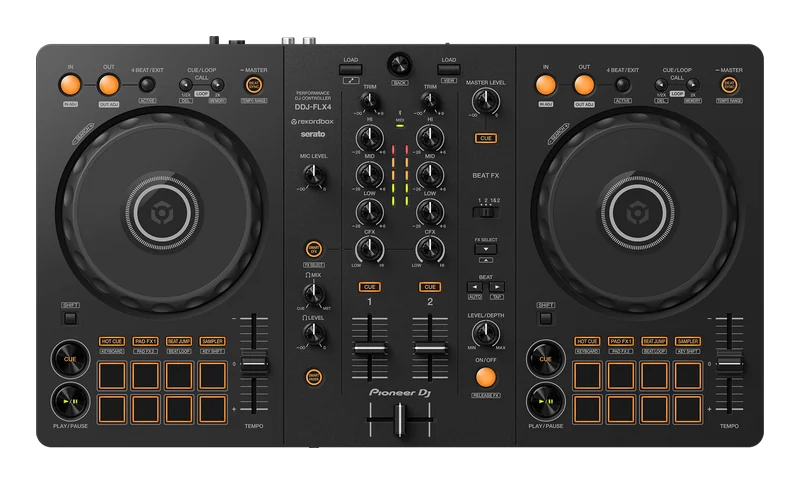
- Complete 2-channel layout with proper mixer and deck controls
- Built-in master and headphone audio outputs
- Broad Rekordbox, Serato and mobile-device support
- RCA master output only
- No standalone mixer or external deck inputs
When it comes to starter DJ controllers, the Pioneer DDJ-FLX4 can be considered the safest all-round recommendation. It is the direct successor to the DDJ-400 and keeps the familiar 2-channel layout while adding USB-C, Smart Fader, Smart CFX and broader device/software support to the mix. Pun intended.
The advantage that the FLX4 has over the ultra-compact models like the FLX2 or the older DDJ-200 is mainly that you can learn the normal DJ workflow without constantly reaching for the laptop or working around missing controls. It is still small enough for a desk or even a backpack, but the layout gives you room to grow before an upgrade becomes necessary.
You can learn much more here: Pioneer DDJ-FLX4 vs. DDJ-400 – What changed?
2. AlphaTheta DDJ-FLX2

- Very small and easy to carry
- Built-in audio interface
- Low-cost entry into Rekordbox and mobile DJing
- Fewer dedicated controls than the FLX4
- A very cut-down set of features
- Compact controls are much less comfortable for long sessions
The AlphaTheta DDJ-FLX2 is the cheaper and much more portable option. It keeps the compact approach of the DDJ-200 while adding its own master and headphone audio outputs.
The FLX2 makes the most sense if you want the smallest possible setup, plan to mix from a phone/tablet, or simply want to spend less at the start. Compared with the FLX4, a much larger part of your workflow will depend on the screen, as there are fewer dedicated hardware controls. It supports several current DJ apps, including Rekordbox, Serato DJ Lite, Algoriddim Djay and Traktor Play.
A reasonable place to start if you can get it for a good price, but in my eyes, a very limited device compared to the other options out there (and listed here).
You can learn much more here: AlphaTheta DDJ-FLX2 vs. Pioneer DDJ-200 – What’s changed?
3. Native Instruments Traktor MX2

- Full Traktor Pro 4 license included
- Deep Traktor FX and stems integration
- 24-bit/96 kHz audio interface with microphone input
- Best suited to the Traktor ecosystem
- A rather unconventional minimalist design
For a Traktor-first setup, the Traktor MX2 is the current 2-channel Native Instruments controller to look at. It comes with Traktor Pro 4 and has a much more complete control surface than the very small entry-level units. Its minimalist design might not appeal to everyone, but it’s a very strong contender nonetheless.
The MX2 is a good fit for someone who wants to learn inside the Traktor ecosystem rather than switch between different DJ platforms. Thus, it’s aimed mainly at those of you who want as many controller/software customization options as possible, or those of you who simply prefer Traktor for other reasons. It does require its own external power supply, so it is less flexible as a grab-and-go mobile controller than the FLX2 or FLX4.
Used 2-channel controllers worth considering
The Pioneer DDJ-400 is still one of the better used beginner controllers if you find a clean unit at a sensible price, for example here, over on eBay. It has proper library controls, performance pads, a familiar Pioneer layout and remains on Rekordbox’s Hardware Unlock list. A great piece of hardware that can still do most of the things that the newer DDJ-FLX4 has to offer.
If you think you might be interested in that, you can learn more about this one here:
- Pioneer DDJ-FLX4 vs. DDJ-400 (Should You Upgrade?)
- DDJ-200 vs. DDJ-400 (Which One Is Better For You?)
The DDJ-SB3 and DDJ-SR2 can also make sense second hand if you specifically want older Serato-oriented Pioneer hardware instead. Condition and price matter more than the model name at this point.
Best 4-channel DJ controllers for beginners:
1. AlphaTheta DDJ-GRV6
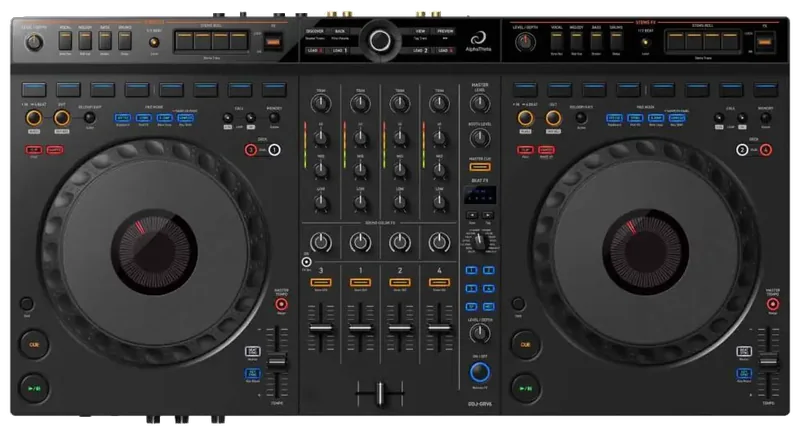
- Four physical mixer channels
- Large jog wheels and club-style control layout
- Groove Circuit in Rekordbox and Stems FX controls in Serato
- Much larger and more expensive than a simple beginner 2-channel controller
The AlphaTheta DDJ-GRV6 is the 4-channel option I would look at first today. It gives you a club-inspired layout akin to what you would see when putting two CDJ players and a DJM mixer together, large full-size jog wheels and four physical mixer channels without jumping to the premium price tier.
If you already know you want four channels, the GRV6 gives you much of the larger-controller workflow without paying for the features present on the more expensive competitors such as more extensive I/O and more granular controls. Groove Circuit in Rekordbox and Stems FX controls in Serato are useful extras here as well.
Read more here: AlphaTheta DDJ-GRV6 vs. Pioneer DDJ-FLX6 – full comparison
2. Pioneer DJ DDJ-FLX10
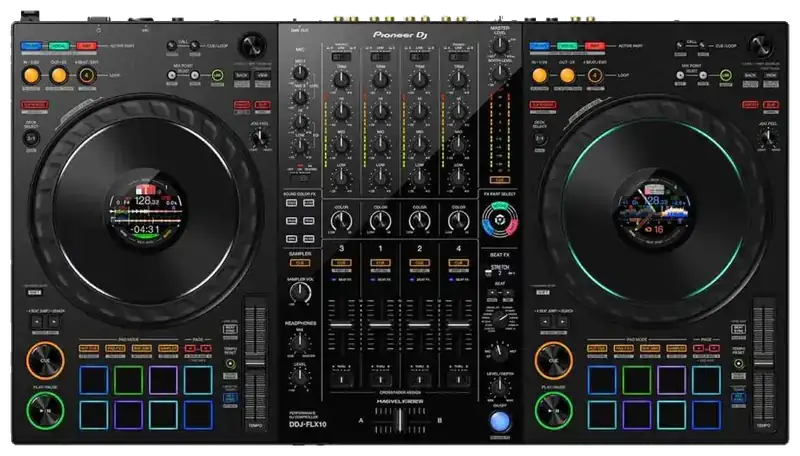
- Four-channel mixer with extensive inputs and outputs
- Large mechanical jog wheels with onboard displays
- Dedicated stem controls and deep Rekordbox/Serato integration
- Very expensive for a first controller
- Large footprint and a set of controls that’s more than what most beginners need
If you want to go much further from the beginning, the Pioneer DJ DDJ-FLX10 is a high-end controller aimed at DJs who want a much more complete 4-channel setup. It replaces the DDJ-1000 in the current lineup and is pretty much as close as you can get to a full club-style CDJ setup in terms of both its layout and feature set.
For most first-time DJs this is far more than they need. It makes sense when you already know you want a serious 4-channel setup, external audio connections and deeper hardware control instead of planning another upgrade later on. It works and has great affinity and control support with both Rekordbox and Serato DJ Pro, and also supports djay Pro, as a neat bonus.
I would say get this first only if you already know what you need it for. It’s among the very best laptop-bound controllers you can get at this point in time.
You might also like: Pioneer DDJ-FLX10 vs. DDJ-1000 – Is it worth the upgrade?
Used 4-channel controllers worth considering
The DDJ-1000 (Rekordbox) and DDJ-1000SRT (Serato) are still capable second-hand options if you want a large, capable Pioneer controller with mechanical jog wheels and a similar club-style mixer layout.
If you specifically want a four-channel Traktor-dedicated device, the Traktor Kontrol S3 and S4 MK3 are worth checking on the used market too. The S4 MK3 is the more advanced model with motorized Haptic Drive jog wheels, while the S3 does not feature motorized jogs but is similarly capable. The DDJ-SX3 is another great used option aimed at Serato.
Cheaper DJ gear alternatives
A tiny pocket-sized controller can make sense on a very tight budget or when portability matters most, but the smallest models can actually be harder to learn on because they leave out controls such as a full EQ section, longer tempo sliders and complete library browsing.
Cheap, compact options include the Numark DJ2GO2 Touch and Hercules DJControl Inpulse 200 MK2. If your budget stretches further, the DDJ-FLX2 is a more complete mobile-friendly option.
Can I buy used DJ controllers online?
There are many opportunities to buy used DJ gear online, and second-hand hardware can be worth your attention on a tight budget. Check the condition carefully before buying professional equipment from a previous owner.
With second-hand controllers, check software and operating-system compatibility before paying. Test the channel faders, crossfader, jog wheels, tempo faders, USB socket, audio outputs and every performance pad/button you can. Intermittent USB connections and worn faders can turn a cheap deal into a repair project quickly.
Headphones for DJing
I’d be lying if we said you cannot use a simple spare pair of generic headphones you already have for mixing. You will use them constantly during practice and sets, so make sure they fit well, isolate enough sound for cueing, give you enough cable length to move around and do not tire out your ears too quickly.
The Audio-Technica ATH-M30X headphones still fit this role well: they are reasonably priced, foldable and useful for both DJ practice and general audio work.
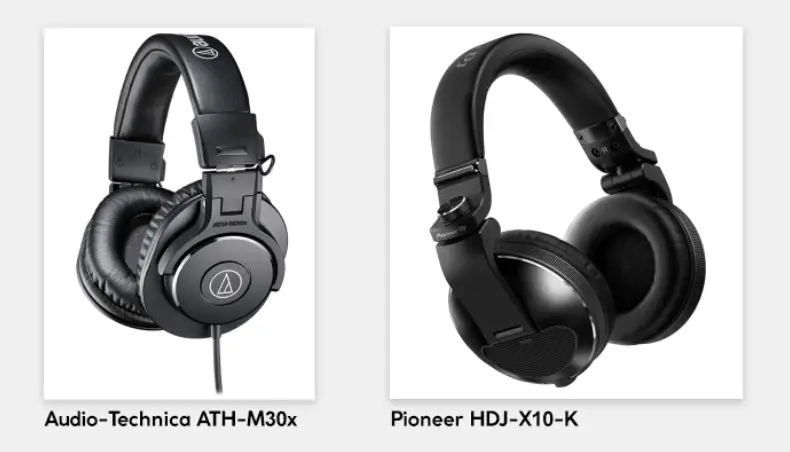
On the higher end, the Pioneer HDJ-X10 remains a serious pair of DJ headphones even after a few years have passed from when it first hit the market. AlphaTheta’s newer HDJ-F10 is the current flagship model and a spirit successor to the X10’s. Both of these are, however, reasonably expensive.
A good pair of DJ headphones can last for years, especially if the cable and ear pads are replaceable. It is usually better to buy one comfortable, durable pair than to treat headphones as a disposable accessory.
Speakers & essential cables
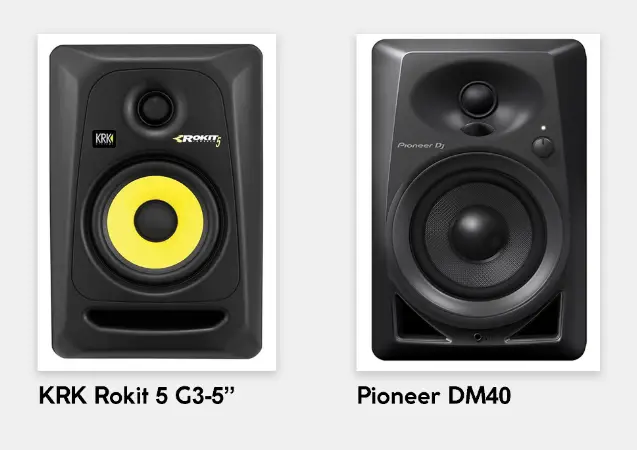
You will also need something to listen on. If you do not already have suitable powered speakers, a pair of small active studio monitors is a practical choice because you can use them for DJ practice, general listening and music production.
KRK ROKIT monitors remain a popular option, with the KRK ROKIT 5 G5 as the current 5-inch model. The Pioneer DJ DM-40D is the successor to another great albeit older pick here, the base DM-40.
Once you get your speakers, the cable depends entirely on the outputs on your controller and the inputs on the speakers. Common connections include RCA, 1/4-inch TRS and XLR.
If your DJ controller features only RCA outputs, an RCA-to-XLR cable can physically connect the devices, but keep in mind that an RCA source is still an unbalanced signal. For long cable runs into a professional PA system, a DI box or external mixer/interface is usually the safer solution.
The cables are rarely bundled with monitor speakers so be sure to get appropriate cabling alongside your speaker set.
DJ controller outputs are line-level outputs. If you have passive speakers, you will also need an amplifier between the controller and the speakers. Active/powered monitors have their amplifiers built in.
Can I use my new DJ gear with the speakers I already have at home?
You can absolutely use speakers you already have at home if you don’t want to spend more yet. Consumer speaker quality varies, but a basic pair can be perfectly fine for DJ practice even if they are not accurate enough for music production.
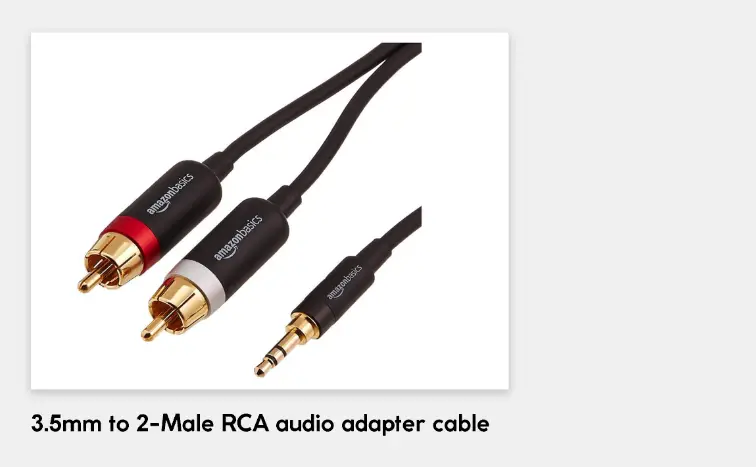
Remember that to connect DJ gear with RCA output to a set of powered speakers that takes only a 3.5mm line input, you may need a cheap 3.5mm to 2-Male RCA audio adapter cable.
If you eventually move from practicing at home to playing events, depending on the occasion you may have to provide the sound system yourself. A portable PA or full professional PA system may be required depending on the venue and event size.
Do not use a normal Bluetooth connection for your main DJ output if you can avoid it. Bluetooth speakers often add enough latency to make cueing and beatmatching annoying or completely impractical. Use a wired connection, or a genuinely low-latency wireless system designed for monitoring/performance. Even then, it’s best to avoid wireless whenever possible.
In conclusion:
The basic setup is simple: a DJ controller, a computer or mobile device if the controller needs one, headphones, powered speakers and the right cable to connect them. If you want to save money, the headphones and speakers you already have may be perfectly fine for your first practice sessions.
The controller is the part worth comparing most carefully. The DDJ-FLX4 is the safest general beginner pick, the DDJ-FLX2 makes sense if you need something cheaper and smaller, the Traktor MX2 if you already want Traktor, and the DDJ-GRV6 if you know you want four physical mixer channels from the start.
Pioneer/AlphaTheta equipment dominate this list, but Numark, Hercules, Native Instruments, Reloop and other manufacturers are worth considering too. Compare the layout, software support, audio outputs and condition before buying, especially with used hardware. And that’s pretty much it. Rock on!