

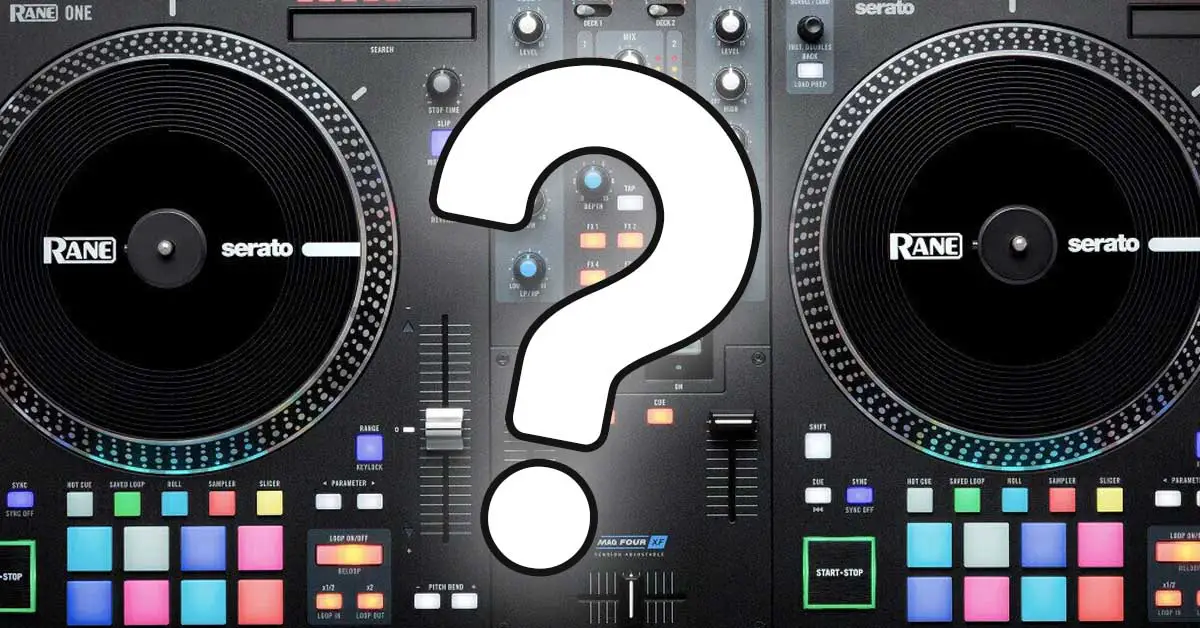
Is the original Rane ONE still worth it? Yes – especially if you can get one used or discounted for a good price. Its motorized platters, solid build quality and Serato integration still hold up well, although the newer Rane ONE MKII is the better option if you want built-in FX and dedicated Stems controls. There are quite a few alternatives to consider, including the Pioneer DDJ-REV7 and the newer Rane ONE MKII. I’ll go over the most important features of the original ONE first.
You might also like: Rane FOUR vs. Rane ONE – Gear Comparison
The motorized jog wheel platters
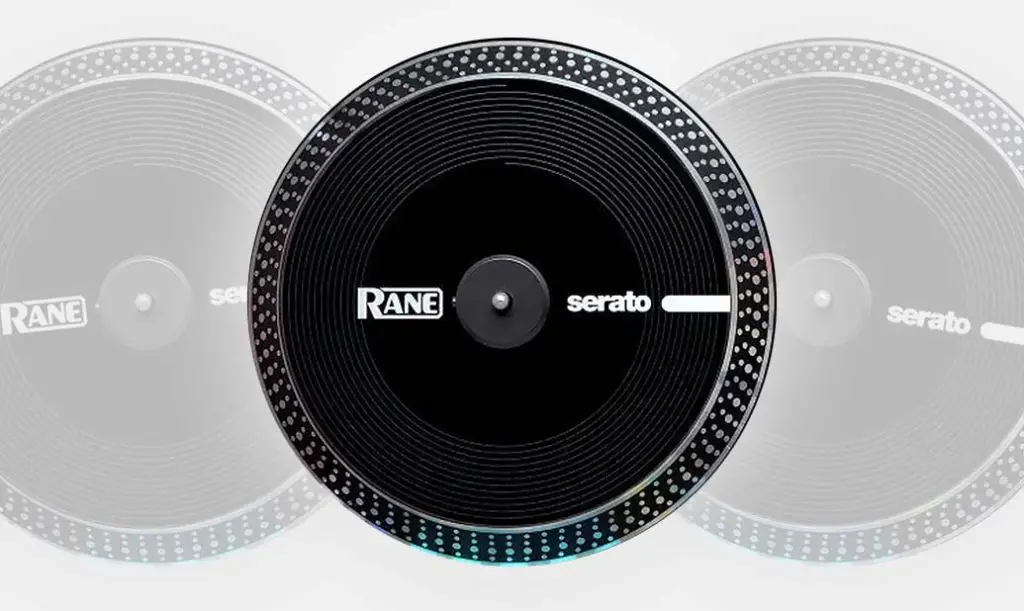
One of the main selling points of the Rane ONE is its 7.2″ motorized jog wheel platters that emulate the vinyl mixing experience in a pretty accurate way.
The motorized platters on the Rane ONE feature a classic spindle in the middle, which its rival – the Pioneer DDJ-Rev7 doesn’t have.
On the Rane ONE, you also have the advantage of being able to completely disable the platter motor, if you’d like to mix without the jog wheels moving.
Another huge advantage of the Rane One is that it makes use of small 7.2″ slip mats rather than slip rings which are the only option on the DDJ-Rev7. This can also make swapping them for custom slip mats relatively simple.
You might also like: What Is A Battle Style DJ Controller Layout? – Quickly Explained
Size & weight
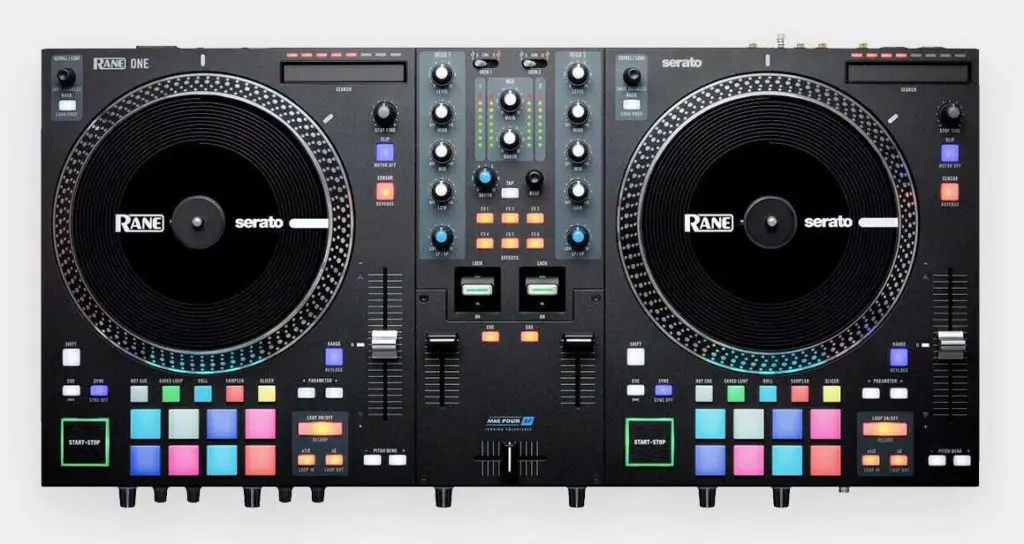
The Rane ONE weighs around 23.6 lb / 10.7 kg which makes it one of the heavier DJ controllers out there. Among other things, this has to do with its built-in power supply which in my opinion is a great advantage if you don’t want to carry an additional power brick with you to all your gigs.
The size of the Rane One is another matter, and although it’s slightly smaller than, say, the Pioneer DDJ-REV7 or the Pioneer XDJ-XZ (which are in a similar weight category), it’s still quite a chunky device that should ideally be paired with a quality travel case.
The overall build quality of the device is good, and its shell is really well made. You can expect it to serve you for quite some time if you handle it correctly. The price you pay for all that sturdiness is, as always, the controller’s weight.
The FX section
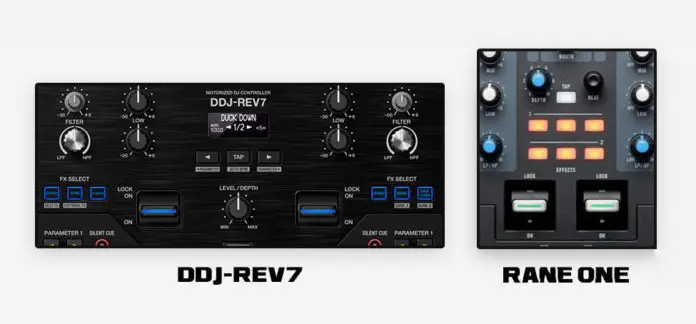
Rane ONE has the FX controls located in the middle of its mixer section. You get access to:
- 6 FX selection buttons (up to 6 FX can be active at once).
- 1 Beat parameter knob.
- 1 FX Depth control knob.
- 2 FX activation paddles.
The FX paddles on the Rane One can be engaged in hold mode while pressed down or locked in the on position when flicked up. This FX control scheme is widely appreciated both by scratch DJs and people who enjoy a different take on FX controls from the “classic” club standard Pioneer DJ FX strip approach.
Rane One is one of the few DJ controllers that feature the nifty FX paddle controls (the other ones that come to mind are for instance the Pioneer DDJ-Rev7 and the Numark Mixtrack Pro FX).
Unlike the Pioneer DDJ-REV7, the original Rane ONE doesn’t feature built-in hardware FX. Its FX controls operate the effects inside your DJ software. With the Rane One you can only utilize the audio FX your DJ software gives you access to.
Learn more here: Pioneer DDJ-Rev7 vs. Rane One (Gear Comparison)
Search strip feature
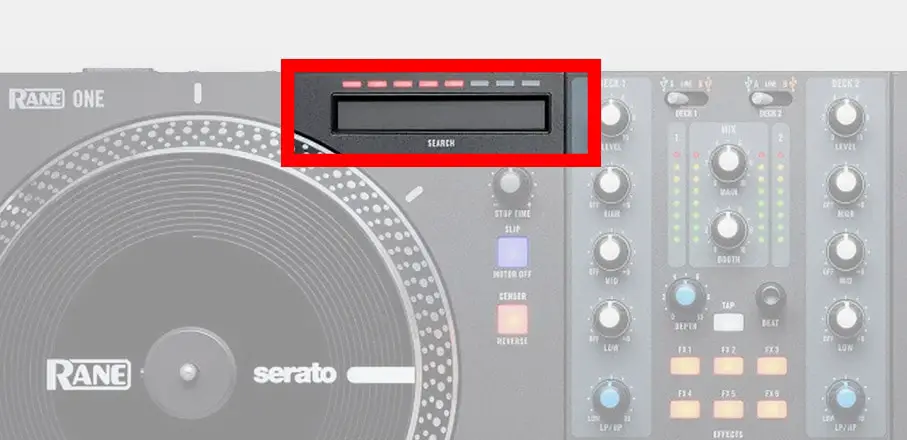
The Rane ONE has a touch strip above each of its decks. This strip works in exactly the same way it does on DJ controllers such as the DDJ-SX2 or SX3 – it lets you quickly navigate and move through your tracks without having to rely on your computer mouse.
Just drag your finger across the search strip, and your virtual needle will move accordingly through the track loaded on the deck. In comparison, the Pioneer DDJ-Rev7 doesn’t feature search strips at all.
A built-in power supply
The Rane ONE features a built-in power supply, so you don’t need to carry a separate power brick.
That’s a nice practical advantage over the Pioneer DDJ-REV7, which uses an external power adapter.
| Pioneer DDJ-Rev7 on Ebay: |
| Rane One on Ebay: |
Dual USB inputs
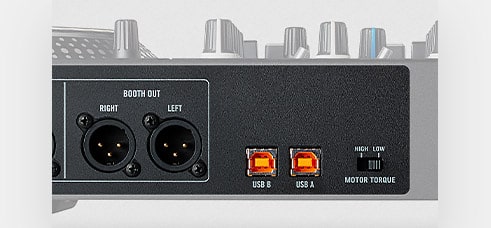
The Rane One has one more tactical advantage in store. Like many professional DJ controllers, the Rane ONE features dual USB ports for connecting two computers.
This feature can easily aid you with back-to-back mixes and help with seamless DJ changes in a live context. It’s a really neat option to have, and it’s there.
Software compatibility
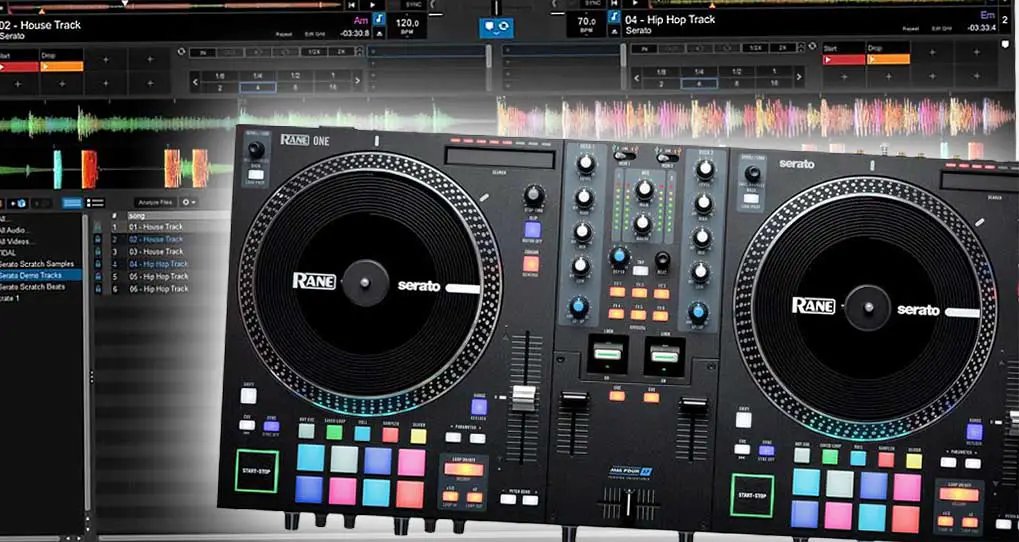
The Rane ONE is primarily a Serato DJ Pro controller and acts as a hardware unlock device, so Serato DJ Pro is available whenever the controller is connected.
Keep in mind that if you’d like to make use of Serato DVS with external turntables or players you would have to purchase an additional Serato DJ Pro expansion pack.
The Rane ONE also additionally works with VirtualDJ and Algoriddim djay Pro. Still, Serato DJ Pro is still the software it’s most closely designed around.
Serato Stems are also supported on the original ONE. You can replace one of its existing performance pad modes with Stems mode, although you don’t get the dedicated Acapella, Instrumental and Stems controls found on the ONE MKII.
You might also like: Serato DJ Lite vs. Pro (12 Most Important Differences)
What about the Rane ONE MKII?
If you’re buying new, the Rane ONE MKII should be the first alternative you look at. It keeps the same basic 2-channel motorized-platter concept, but adds internal hardware FX, dedicated Serato Stems controls, secondary performance pads, Channel FX, a central OLED display, improved channel faders and a few other upgrades.
The original ONE still has one feature the MKII actually drops – the touch strips above the decks. If you’re buying used and don’t care much about the newer FX and Stems controls, the original can still make a lot of sense.
Rane One vs. Pioneer DDJ-Rev7
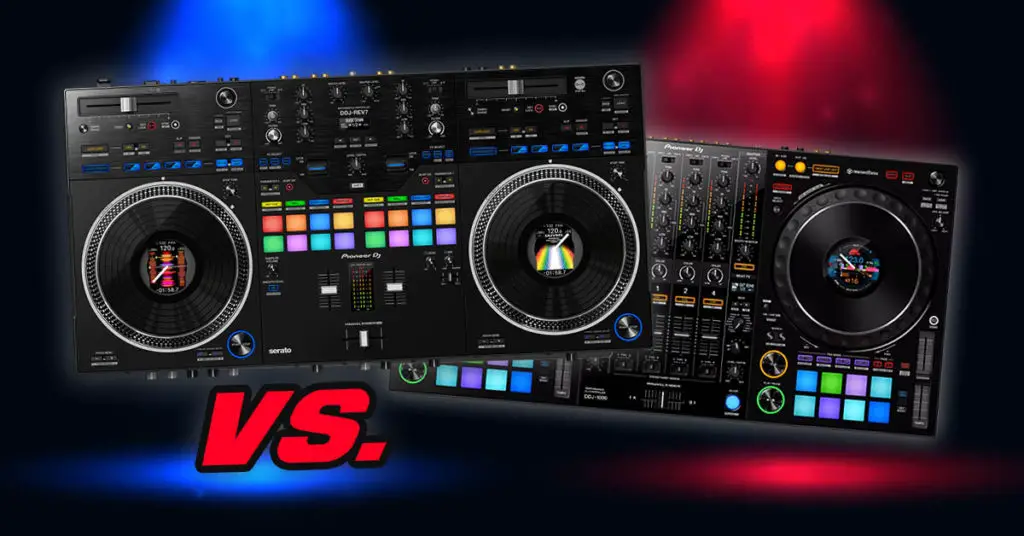
Another strong alternative to the original Rane ONE is the Pioneer DDJ-REV7. While these devices are pretty similar in terms of their target audience, there are quite a few substantial differences between them.
Luckily we have a detailed and straight to the point comparison of these two DJ controllers, that goes over all their most important differences, similarities and covers all their most important differences and similarities. You can check it out here: Pioneer DDJ-Rev7 vs. Rane One
The conclusion – is the Rane One still worth it?
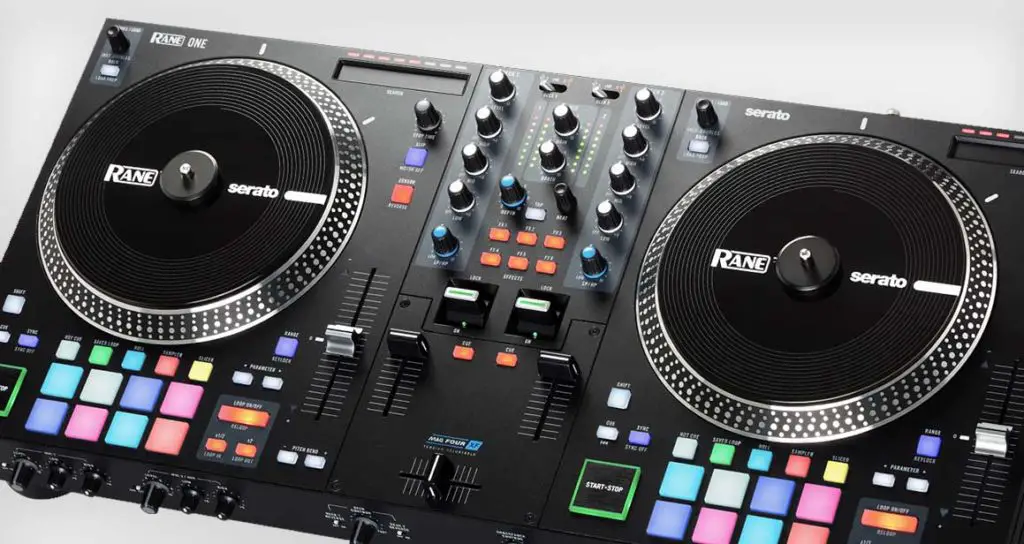
To sum it all up, the original Rane ONE is still a very capable controller for scratch DJs, while also being perfectly usable for more traditional mixing. Its motorized platters, FX paddles, sturdy build, dual USB ports and built-in power supply are still a strong combination.
The Rane ONE came out in 2021, and the hardware itself still holds up well. The bigger question now is whether the price makes sense next to the newer ONE MKII. The original ONE is also still supported by current versions of Serato DJ Pro, VirtualDJ and djay Pro.
In my opinion, getting the original Rane ONE is still a viable option if you find one at a good price.
Should you get the original Rane ONE?
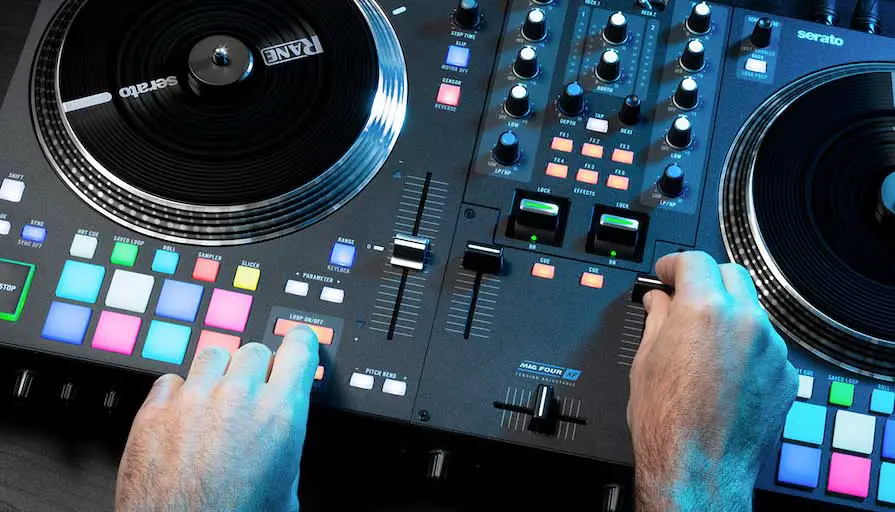
If you’re debating whether or not to get the original Rane ONE, I’d mainly consider one used, refurbished or at a good discount. For a brand-new purchase, compare it with the Rane ONE MKII and Pioneer DDJ-REV7 first.
All in all, the original Rane ONE still has plenty going for it. The main question is whether its simpler control scheme and lower price are more important to you than the extra features on newer alternatives.