Serato DJ Pro vs. Traktor – which DJ software is better for you? Both are powerful professional DJ platforms alongside VirtualDJ and Rekordbox, but there are some pretty important differences when it comes to hardware support, customization, Stems, streaming, DVS and pricing. I’ll compare the current Serato DJ Pro with Traktor Pro 4 and point out the differences that actually matter.
Major updates:
– September, 2026 – Updated the whole comparison for the new features present in Traktor Pro 4 and newest versions of Serato DJ Pro.
Similarities – what both of them can do with ease
Both Serato DJ Pro and Traktor give you the ability to mix and blend the tracks together, manage your track library and let you make use of basic additional functions such as audio FX, audio loops and cue point management.
While both Serato DJ Pro and Traktor will be more than enough for both a beginner and advanced DJ on their own, there are a few substantial differences between them that might influence your choice when it comes to your software preference.
Here are the most important differences between Traktor and Serato DJ Pro.
User Interfaces
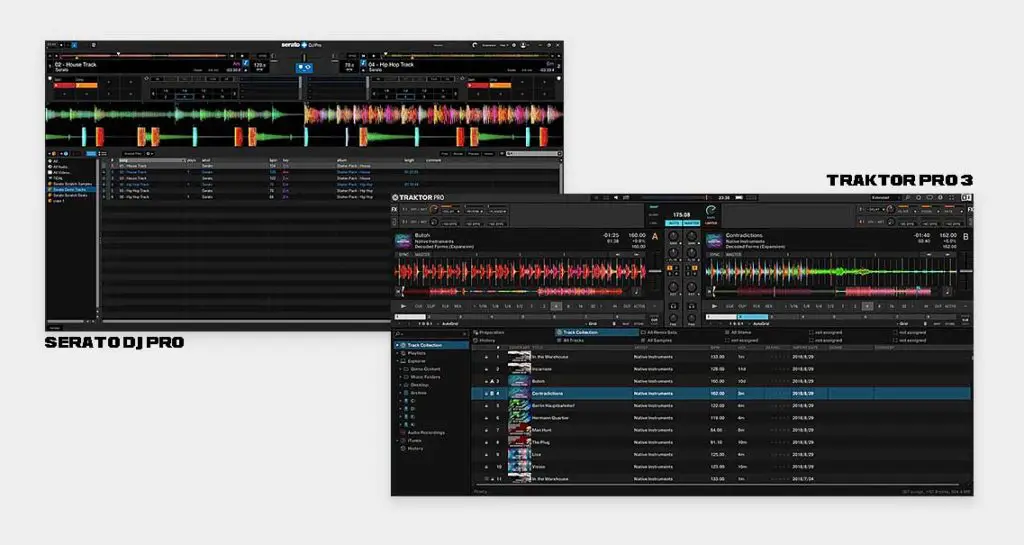
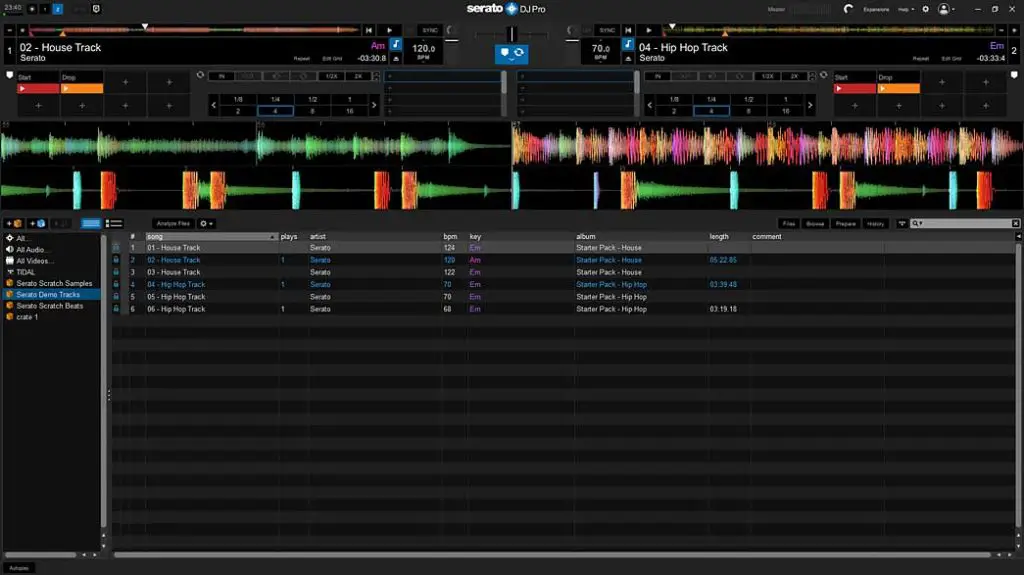
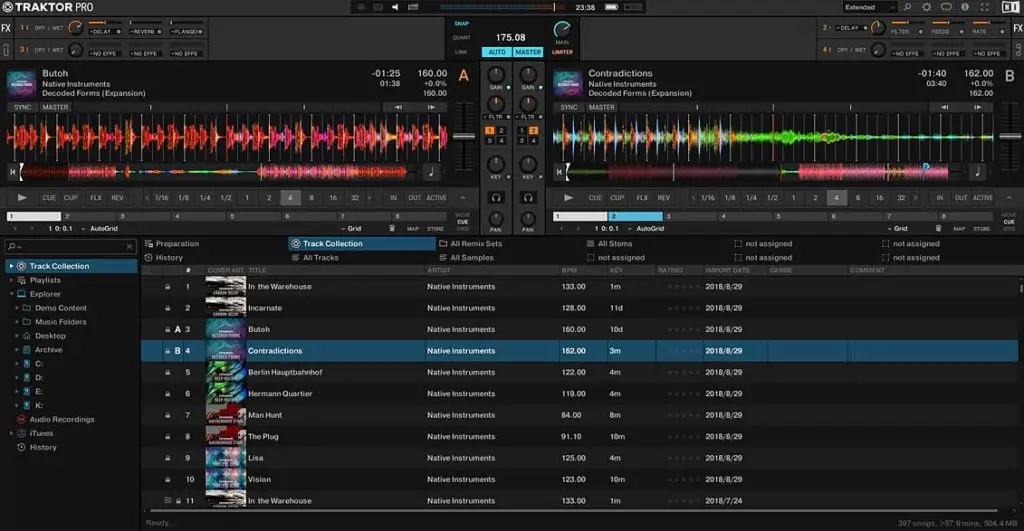
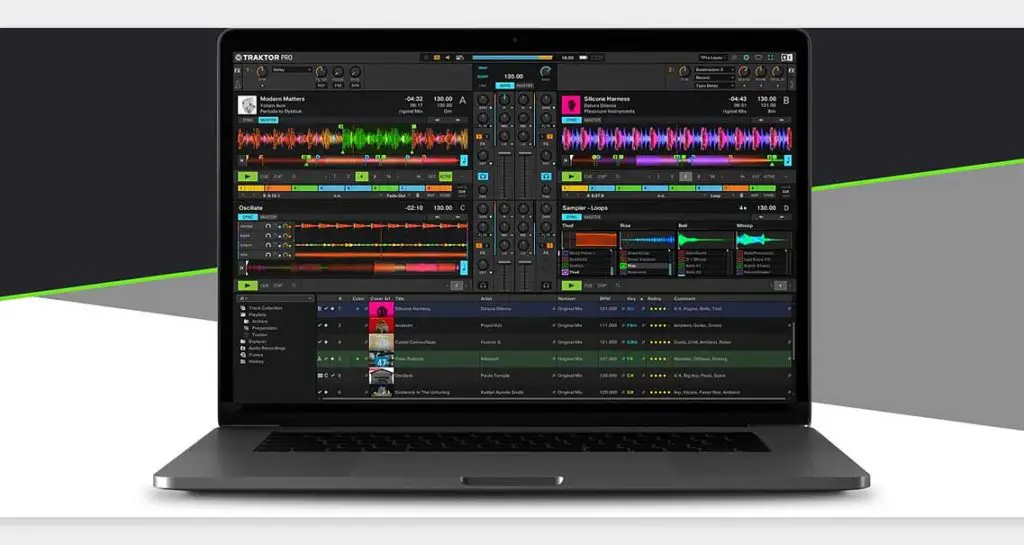
In terms of user interface, Traktor still looks a little more technical and customizable, while Serato DJ Pro takes a somewhat simpler approach to its layout.
It used to be the case that Traktor lacked support for stacked waveform view, however Traktor Pro 3 is nowadays capable of replicating all waveform view modes that Serato DJ has to offer.
Video Mixing
In terms of video mixing, Traktor Pro 3 lacks video mixing capabilities and there are no expansions that could enable any kind of video mix feature.
Serato DJ Pro doesn’t include video mixing in the base Pro license either, but Serato Video adds this functionality and is included with Serato DJ Suite.
If you’re planning to deal with video mixes a lot, I’d also take a look at VirtualDJ software which has extensive video mixing capabilities.
Stems, Remix Decks and live remixing
Both Serato DJ Pro and Traktor now have real-time Stem separation, letting you split regular tracks into vocals, drums, bass and instrumental elements for live mixing.
Traktor Pro 4 uses iZotope RX technology for its Stem separation and gives you individual waveform, volume, filter and FX control over the separated parts. Serato DJ Pro also has its own Stems workflow and adds features such as Stems FX.
One feature that still remains distinctly Traktor is Remix Decks. These let you load and trigger loops, one-shots and samples across multiple cells and manipulate them much more like miniature performance decks than a conventional sampler.
So unlike when this article was originally written, real-time Stems aren’t really a reason to choose one of these platforms over the other anymore. The bigger difference is how each one integrates them into the rest of its workflow.
Custom MIDI mapping capabilities + customization
Traktor is still one of the strongest DJ platforms when it comes to custom MIDI mapping and controller customization. You can build very complex mappings, use unusual MIDI devices, customize keyboard controls and create setups far beyond the standard controller workflow.
Serato DJ Pro also supports MIDI mapping and lets you remap many controls on compatible Serato hardware or use secondary MIDI devices. It’s considerably more capable here than it used to be, although Traktor still gives you more freedom when building unusual custom setups.
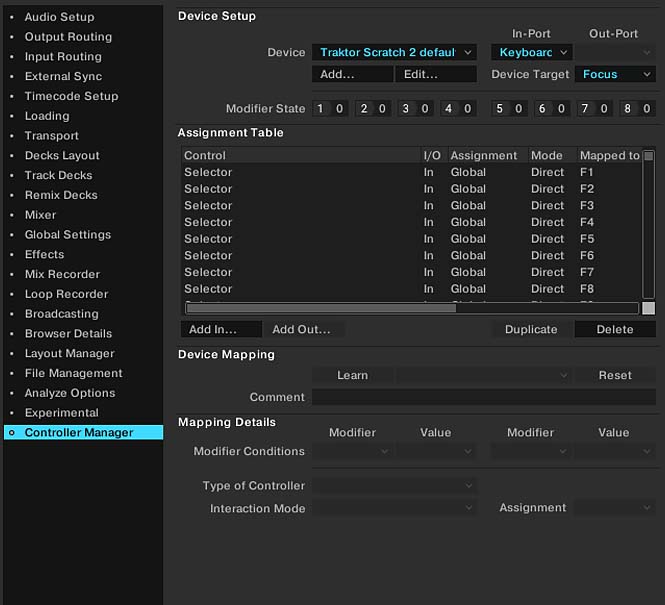
This means that not only you are able to easily customize your DJ controller to your liking, but also you can easily map out virtually any controller that supports sending MIDI signals via USB connection. Novation Launchpad mappings for custom FX controls or sample triggers? No problem there!
DVS support in Serato DJ Pro and Traktor
Traktor Pro 4 includes DVS timecode support as part of the software itself.
With Serato, DVS functionality is part of Serato DJ Suite, although some compatible hardware can also unlock DVS functionality depending on the device.
In Traktor, DVS functionality used to be available only after purchasing the Traktor Scratch solution, although now its built in the Traktor Pro 3 software and available form the beginning, without additional purchases.
In Serato DJ Pro only certain hardware can be used when it comes to DVS control – here is the updated list of compatible devices. Traktor proudly advertises their DVS control solution as compatible with any soundcard you choose, however they still have an official list of certified soundcards and mixers for DVS.
Mixing without a DJ controller
Both Serato DJ Pro and Traktor can now be used without a DJ controller.
Serato DJ Pro has a free Practice Mode that gives you two decks, a crossfader, channel volume, pitch controls and basic mixing functions using your mouse and keyboard. The optional Serato Play expansion adds a more complete laptop-only workflow with additional mixer controls and hotkeys.
Traktor has always been particularly flexible for this kind of setup because most of its software controls and keyboard mappings can be customized directly, so I’d still give Traktor the edge if you genuinely plan to DJ mainly from a laptop.
You can learn more about laptop-only DJing in Serato here: Can You Use Serato On Your Laptop Without A DJ Controller?
In Serato DJ Pro, you are able to easily customize and edit your beatgrids in a way that they are correctly aligned throughout all the track with varying BPM, and this allows you to utilize auto loops and beat based FX in these kinds of songs.
In a few threads on the official Native Instruments forums, there are mentions of users complaining about the lack of possibility to easily handle flexible beatgrids. While this feature might be added in the future, for now for tracks with varying BPM Serato DJ Pro is a much better choice.
Music streaming services support
Serato DJ Pro has the much wider selection of integrated streaming services. It currently supports Apple Music, Beatport, SoundCloud, Spotify and Tidal.
Traktor Pro 4 currently focuses mainly on Beatport Streaming. The old Beatsource service has been merged into Beatport, while Traktor’s iTunes/Music library integration is for locally stored music rather than a streaming subscription.
So if streaming-service choice matters to you, Serato currently has the clear advantage.
You can read more about the music streaming services support in Serato DJ here: How To Use Streaming Services With Serato DJ Pro & Lite
Hardware compatibility – supported DJ controllers
Serato DJ Pro supports a very wide range of officially certified controllers, mixers and accessories, and the integration is generally very tight on hardware designed specifically around Serato.
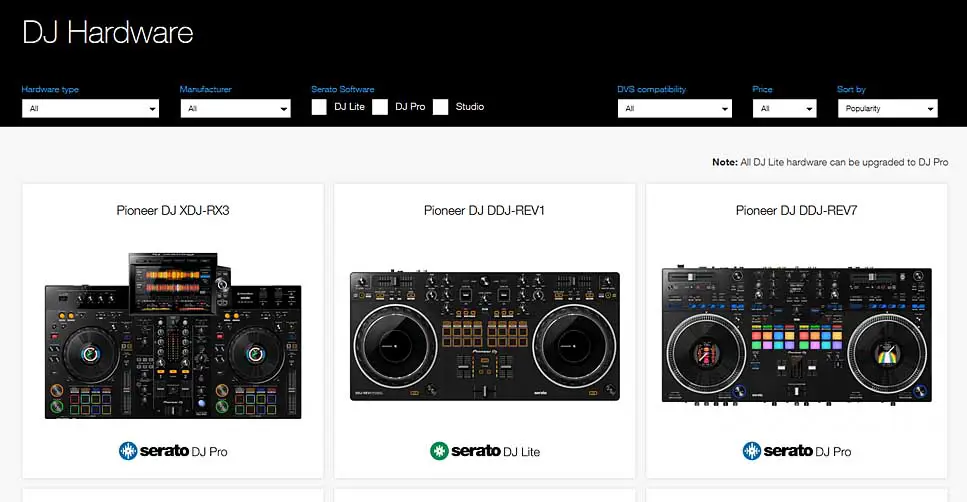
Traktor has its own dedicated Kontrol hardware ecosystem, but its third-party support has expanded as well. Current versions include plug-and-play support for devices such as the DDJ-FLX4 and several Reloop and Numark controllers, while custom MIDI mappings let you go much further with unsupported or unusual hardware.
If you’re interested in Native Instruments’ own controller ecosystem, I’ve also taken a detailed look at whether the Traktor Kontrol S4 MK3 still makes sense to get today.
The price + expansions
Traktor Pro 4 is currently sold as a one-time purchase, and its main Pro features are included in that price. Native Instruments also offers the simpler Traktor Play if you don’t need the full Pro feature set.
Serato DJ Pro can be bought either as a monthly subscription or a one-time license. Some Serato-compatible controllers and mixers also unlock DJ Pro while connected, which means you may not need to buy the software separately.
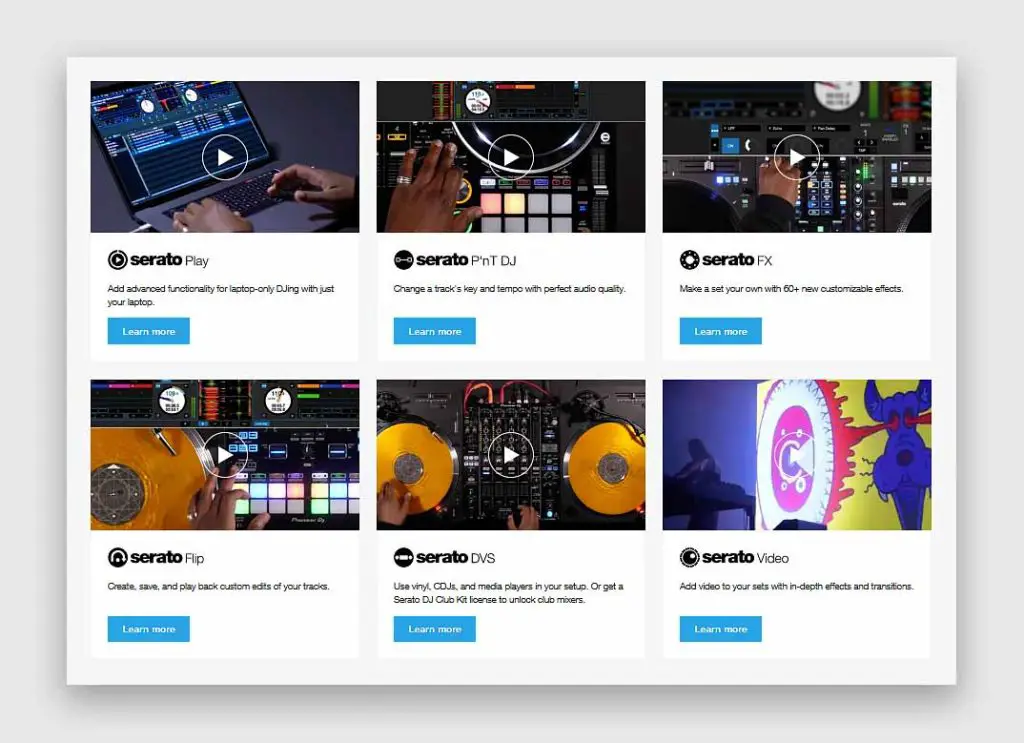
Serato’s additional DVS, Video, Pitch ‘n Time DJ, Flip, Play and expanded FX functionality is bundled through Serato DJ Suite.
Serato DJ Lite and Traktor Play
Both companies now have a lighter entry-level version of their main DJ software.
Serato DJ Lite is completely free and works with a large selection of compatible entry-level hardware. Traktor Play is a paid, streamlined version of Traktor with two decks and a smaller feature set.
If you’re specifically deciding between Serato DJ Lite and Pro, I’ve compared those two separately here.
Pros and cons
Serato DJ Pro:
Pros:
- Clean, simple and efficient GUI.
- Excellent integration with officially supported DJ controllers, mixers and accessories.
- Strong Stems implementation with additional Stems FX controls.
- Good flexible beatgrid tools for tracks with changing tempo.
- Supports Apple Music, Beatport, SoundCloud, Spotify and Tidal streaming.
- Very strong choice for scratch, open-format and DVS setups.
Cons:
- Less flexible than Traktor when it comes to deep MIDI mapping and controller customization.
- The interface itself isn’t very customizable beyond the available view modes.
- Some advanced features such as DVS, Video, Pitch ‘n Time DJ and additional FX require Serato DJ Suite or the appropriate hardware unlock.
- Can become considerably more expensive if you need the full Serato feature set and your hardware doesn’t unlock it.
Traktor Pro 3:
Pros:
- Excels at MIDI customization and controller tweaking.
- Flexible Beatgrids now handle tracks with changing tempo properly.
- High-quality Stem separation powered by iZotope RX.
- Remix Decks are still excellent for live remixing, loops and your own produced material.
- DVS support is included in Traktor Pro 4.
- Pattern Player, Ozone Maximizer and the full Pro FX set are included without separate expansion purchases.
- Lots of options for interface, keyboard and controller customization.
Cons:
- No native video mixing functionality.
- Much fewer integrated music streaming options than Serato.
- Some controllers built specifically around Serato aren’t officially supported or may require custom mappings.
- The interface and huge number of settings can feel more intimidating at first.
The conclusion – main differences
For me, the hardware you’re planning to use is still one of the biggest factors here.
If you’re buying Native Instruments Kontrol hardware, building unusual MIDI setups, using lots of external controllers, or simply love tweaking every part of your workflow, Traktor is still the stronger choice.
If you’re buying hardware designed around Serato, care about broad official controller support, want access to more streaming services, or you’re especially focused on scratch and open-format workflows, Serato DJ Pro will usually be the easier fit.
As a beginner, you also don’t need to obsess over this choice. Most controllers are designed with particular software in mind anyway, and both Serato DJ Pro and Traktor are more than capable enough to learn and perform with. Your preferences will become much clearer once you’ve actually spent some time using them. Rock on!
You might also like: Pioneer DDJ-400 vs. Traktor Kontrol S2 MK3 (Which One Was Better?)

[…] Serato DJ Pro vs. Traktor Pro 3 – DJ Software Ultimate Comparison […]
Comments are closed.